Cost Comparison
Chain-Link vs. Wood Fence Cost in the East Valley
Upfront price, 20-year ownership cost, privacy, and monsoon-wind performance compared for Gilbert, Chandler, Mesa, Queen Creek & San Tan Valley, AZ.
As of October 2026, chain-link fencing in the East Valley costs $10–$25 per linear foot installed versus wood at $15–$35 per linear foot installed — chain-link is the cheaper fence both upfront and over a 20-year ownership horizon, while wood buys solid privacy and curb appeal at a higher price and a shorter lifespan in Arizona sun. East Valley Fence & Wall Pro can match you with a licensed local contractor for a free, itemized quote on either material.
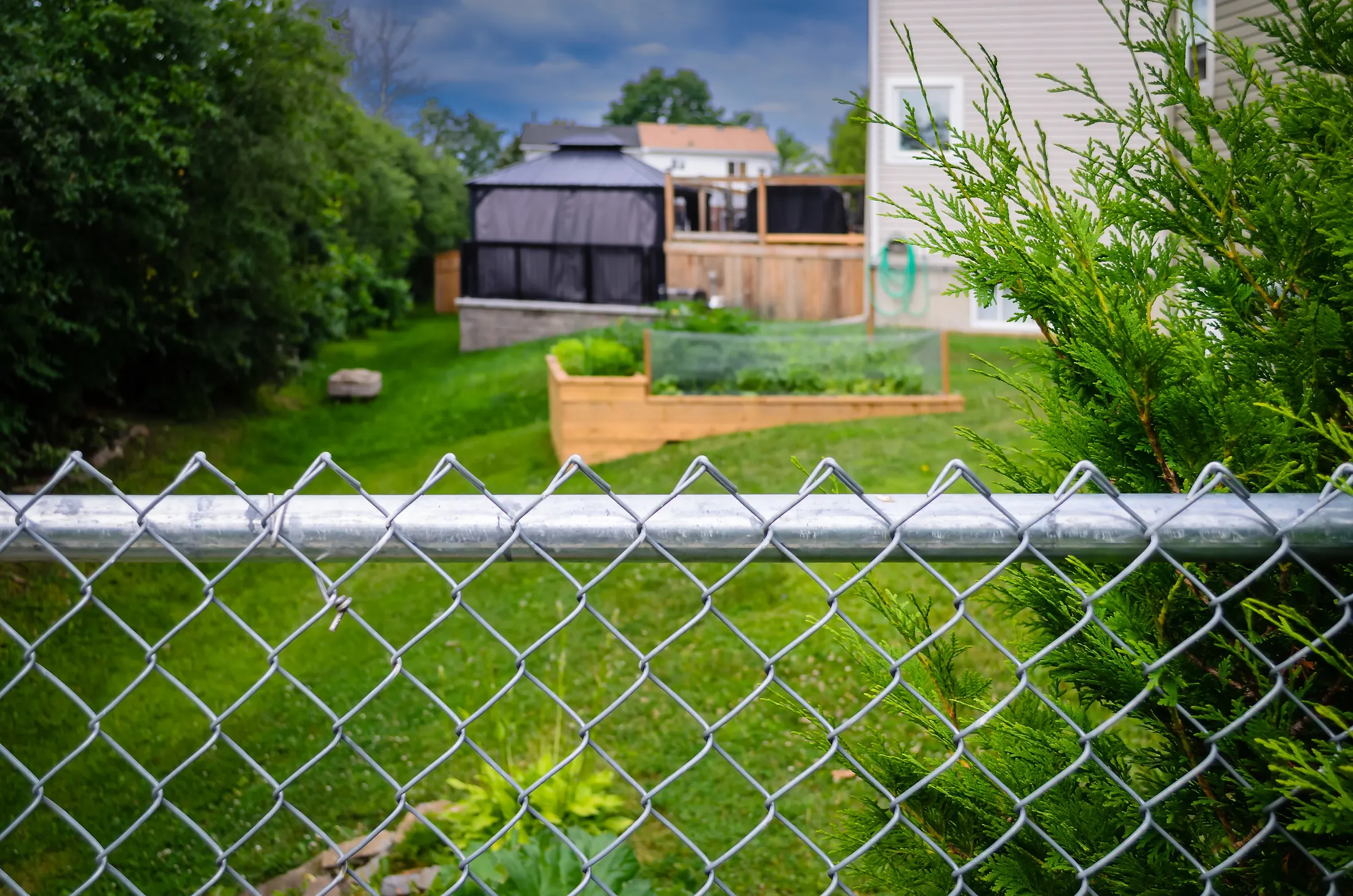
Side-by-Side: Chain-Link vs. Wood
| Chain-Link | Wood | |
|---|---|---|
| Upfront cost per foot installed | $10–$25 | $15–$35 |
| 150-ft run (fence only) | $1,500–$3,750 | $2,250–$5,250 |
| Typical lifespan | 15–20 years | 10–15 years |
| Privacy | Low (open-view, unless slatted) | High (solid board-on-board) |
| Maintenance | Low — about $50–$200/yr | Higher (stain/seal every 2–3 yrs) |
| Monsoon wind | Very good — open weave sheds wind load | Moderate — panels can blow out in monsoon gusts |
| HOA approval | Varies — some HOAs restrict to side/rear yards | Usually easy — common East Valley default |
| Best for | Budget perimeter, pet/property containment | Classic backyard privacy on a budget |
The per-foot ranges above are the same figures used across this site's fence installation cost guide and material pages, so you can compare them directly against the vinyl vs. wood comparison. They cover a standard residential fence — galvanized mesh for chain-link, a basic privacy style for wood — with materials and labor, before gates, old-fence removal, or permit handling.
Upfront Cost: What a Typical East Valley Yard Pays
Fence quotes are priced by the linear foot, so the first number to pin down is how many feet you are actually enclosing — a side-yard gap between the house and a block wall might be a few dozen feet, while larger Queen Creek and San Tan Valley parcels can run several hundred. Using 150 feet as a worked example, chain-link lands around $1,500–$3,750 and wood around $2,250–$5,250 for the fence itself. The gap widens on long perimeter runs, which is why chain-link stays the default for horse property, RV storage areas, and acreage lots on the east side of the valley.
Three things move an actual quote off those ranges:
- Gates. A single walk gate for chain-link typically runs $80–$200 before installation; wood gates vary more because they are built on site and need a sturdier frame to stay square in the heat.
- Removal. Taking out an old fence is usually quoted separately — about $3–$5 per linear foot for chain-link and $10–$20 per linear foot for wood, including haul-away and disposal.
- Caliche. The cemented hardpan under much of Gilbert, Chandler, and Mesa slows post-hole digging on either material. Chain-link needs fewer and smaller footings than a 6-foot wood privacy fence, so it is usually less exposed to a caliche surcharge.
The 20-Year Math
Upfront price is only half the comparison. Arizona sun and the June–September monsoon season are hard on wood: boards dry out, cup, and split, and fasteners back out as the lumber moves. That is why a wood fence here is typically quoted at 10–15 years of service, versus 15–20 years for galvanized chain-link with almost no attention.
Wood over 20 years
- Staining or sealing every 2–3 years at $2–$14 per linear foot — roughly $300–$2,100 per cycle on a 150-foot fence, or six to eight cycles over 20 years if you keep up with it.
- Ongoing maintenance averaging $2–$6 per linear foot per year (about $300–$900 a year on 150 feet), with individual repair visits for a blown-out panel or rotted post commonly running $300–$900.
- One full replacement somewhere in the 10–15 year window — a second $2,250–$5,250 ticket at today's prices.
Chain-link over 20 years
- Upkeep of about $50–$200 a year — tightening a sagging top rail, replacing a bent tension band, re-hanging a gate.
- No staining, sealing, or painting. Galvanized mesh handles UV without a coating; vinyl-coated mesh costs more upfront but tends to outlast plain galvanized.
- Usually no replacement inside the window. A chain-link fence installed today is likely still standing at year 20.
Add it up and wood's total cost of ownership can run two to three times its install price, while chain-link's stays close to the number on the original quote. If you plan to be in the home more than a few years and privacy is not the deciding factor, chain-link is the lower-cost fence by a wide margin.
Privacy: Slats vs. Solid Boards
The reason most East Valley homeowners still choose wood is sightlines. A board-on-board or dog-ear privacy fence blocks the view completely; chain-link does not. The middle path is privacy slats woven into the mesh, which add $5–$18 per linear foot and put a slatted chain-link fence at roughly $15–$43 per linear foot — still at or below a wood privacy fence, with chain-link's lifespan.
Two honest caveats on slats:
- They screen rather than block. You will still see movement and light through the mesh, which is fine for a side yard and less convincing along a patio or pool deck.
- They turn an open fence into a partial sail. Slatted chain-link catches far more monsoon wind than bare mesh, so ask the contractor about post spacing and footing depth if you add them — the wind advantage in the next section shrinks once the slats go in.
If full privacy is non-negotiable, compare wood against vinyl or a block wall instead — our vinyl vs. wood guide and block wall vs. wood fence guide cover those trade-offs.
Monsoon Wind and Arizona Sun
Every summer the East Valley sees outflow gusts and haboob dust walls, and the first thing that fails in a storm is usually a solid fence panel. Chain-link's open weave lets wind pass through, so the load on each post is a fraction of what a 6-foot wood panel carries. Wood fences fail in two ways here: panels blow out when fasteners have loosened from seasonal movement, and posts snap at grade where rot or sun damage has weakened them. Our monsoon fence damage prep guide walks through what to check before the season starts.
Sun is the slower killer. Untreated or under-maintained wood grays, checks, and loses fasteners within a few summers; galvanized steel simply does not care. That difference is the whole reason the lifespan gap exists, and it is wider in Arizona than in the national averages most cost sites quote.
HOA Rules, Front Yards, and Resale
Many East Valley subdivisions sit inside an HOA, and the CC&Rs usually have a say in both material and placement. Wood privacy fencing is a common default and rarely draws objections in a rear yard. Chain-link is more often restricted — some communities limit it to side and rear yards or prohibit it where it is visible from the street — so read your architectural guidelines before collecting quotes. Our Arizona fence permit & HOA rules guide covers the approval process and when a city permit enters the picture.
On resale, a well-kept wood privacy fence reads as a finished backyard; chain-link reads as utility fencing. Neither is a large line item in an East Valley appraisal, but if you are fencing a front yard or a lot that backs to a street, curb appeal may justify wood's premium — or ornamental iron, which many HOAs prefer for street-facing runs.
Which Should You Choose?
- Choose chain-link if: you are fencing a large lot, a dog run, a side yard, or an RV pad; you want the lowest 20-year cost; or monsoon durability matters more than privacy.
- Choose wood if: solid privacy is the point, the fence is visible from living spaces or the street, your HOA restricts chain-link, and you are prepared to stain or seal it on schedule.
- Consider slatted chain-link if: you want partial screening at a chain-link price and the run is sheltered enough that extra wind load is not a concern.
Getting Quotes That Compare Apples to Apples
Ask each contractor for a written, itemized quote that separates fence materials, labor, gates, removal, and any permit handling. For chain-link, confirm the mesh gauge, galvanized versus vinyl-coated, and whether the top rail and tension wire are included. For wood, confirm the species and grade, post material (wood or steel — steel does not rot at grade), and whether a first coat of stain or sealer is part of the price. Fence installation is licensed work in Arizona; see our licensed vs. unlicensed contractor guide for how to verify a license before you sign.
East Valley Fence & Wall Pro is a free matching service — we connect you with independent, licensed East Valley fence contractors who report holding an active license, and they provide the quote and do the work. Tell us about your project to get matched.
Methodology & Sources
Per-foot installed ranges are this site's standing East Valley figures, researched from national cost-aggregator benchmarks and Arizona pricing pages and kept consistent across every page here. Add-on and ownership figures (privacy slats, gates, removal, staining, annual upkeep, repair tickets) are national aggregator ranges from HomeGuide's chain-link fence cost, wood fence cost, and chain-link vs. wood fence cost guides, read October 14, 2026 — not East-Valley-specific invoices. Lifespan and maintenance characteristics match the material comparison on our homepage. Actual quotes vary by contractor, material grade, lot conditions, and current steel and lumber prices — always get a written, itemized quote before committing.
Get Matched — Compare Real Quotes on Both Materials
Tell us about your project and we'll connect you with a licensed local pro — free, no obligation.
Frequently Asked Questions
Is chain-link or wood fencing cheaper in the East Valley?
Chain-link is cheaper upfront at $10–$25 per linear foot installed versus wood at $15–$35 per linear foot as of October 2026. On a 150-foot run that is roughly $1,500–$3,750 for chain-link against $2,250–$5,250 for wood before gates, removal, or permits.
Which is cheaper over 20 years, chain-link or wood?
Chain-link usually wins on 20-year cost: a galvanized chain-link fence typically lasts 15–20 years with upkeep of about $50–$200 a year, while a wood fence lasts 10–15 years in Arizona sun and needs staining or sealing every 2–3 years at $2–$14 per linear foot — and often a full replacement inside the same 20-year window.
Can chain-link give me privacy like a wood fence?
Partly. Privacy slats add $5–$18 per linear foot to a chain-link fence, which puts a slatted chain-link fence at about $15–$43 per linear foot — still at or below the cost of solid wood, but slats screen the view rather than block it and they catch more monsoon wind.
Which fence holds up better in East Valley monsoon storms?
Chain-link. Its open weave sheds wind load, while a solid wood privacy fence acts like a sail — blown-out panels and snapped posts are the most common post-storm fence repairs in Gilbert, Chandler, Mesa, Queen Creek and San Tan Valley. Adding privacy slats to chain-link reduces that advantage.
Do East Valley HOAs allow chain-link fencing?
It varies by community. Some HOAs restrict chain-link to side and rear yards or prohibit it in street-facing locations, while wood privacy fencing is a common East Valley default. Check your HOA's CC&Rs and architectural guidelines before you get quotes.
Does the price include removing my old fence?
Usually not. Removal and haul-away is often a separate line item — roughly $3–$5 per linear foot for an old chain-link fence and $10–$20 per linear foot for an old wood fence including disposal — so ask each contractor to itemize it.